green-eyed
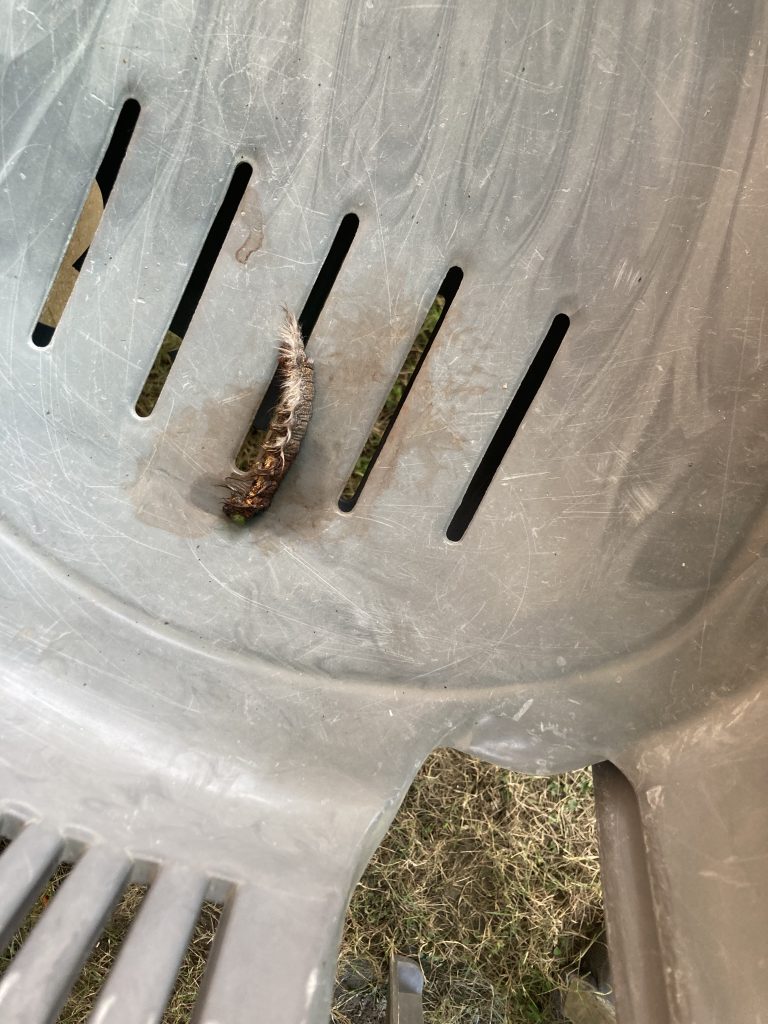

‘‘The Monkey Paw Orchard’ is kind of like a reserve in that it contains the only significant population of monkeys known for their wish-granting appendages and it’s kind of like a slaughterhouse in that the animals are being raised for product. Paw Monkeys are rare for the same reason their posthumous powers should be used with caution- they often fall prey to tragic ironies before they’ve reached an age at which their paws have matured for harvest. Those that survive the early onset of irony will sometimes kill wizened older monkeys and attempt to make wishes on their paws before employees of the reserve can stop them. Those monkeys that don’t die in the attempt and who subsequently survive their own near-assassinations and who pass the prime age for breeding are killed and their hands are sold to billionaires, celebrities, and to a non-profit that places monkeys’ paws in derelict houses, buried chests, and shifty pawnshops all across the country.
Rumor has it that ‘The Monkey Paw Orchard’ is what happens when someone tries to wish for more wishes but, if that were the case, there would probably be a lot more of these monkeys around.’
I happen to be on site when one of the younger paw monkeys kills an elder nearing harvest. It’s quick and brutal- a heavy stone to the back of the head. Again. Again. Hard to make sure it’s done. Fast to get to the wishes before someone comes to stop it. The paws don’t need to be removed for the magic to work. That’s more a matter of convenience than anything.
Obviously without understanding the language of the monkeys, I can’t say for sure what its wish was, but I was surprised to see that nobody came to retrieve the dead specimen or quiet the murderer as it did excited victory laps around the massive enclosure that constitutes ‘The Orchard.’
Weeks later I notice the same two monkeys in the background of an image posted to ‘The Orchard’s’ social media feed. The dead monkey still rots in the reserve. The living monkey is all skin and bones, on the verge of death itself. I figured the monkey had asked for more time to make more wishes.
Now, I wonder if the monkey didn’t just want to be left alone.
-traveler
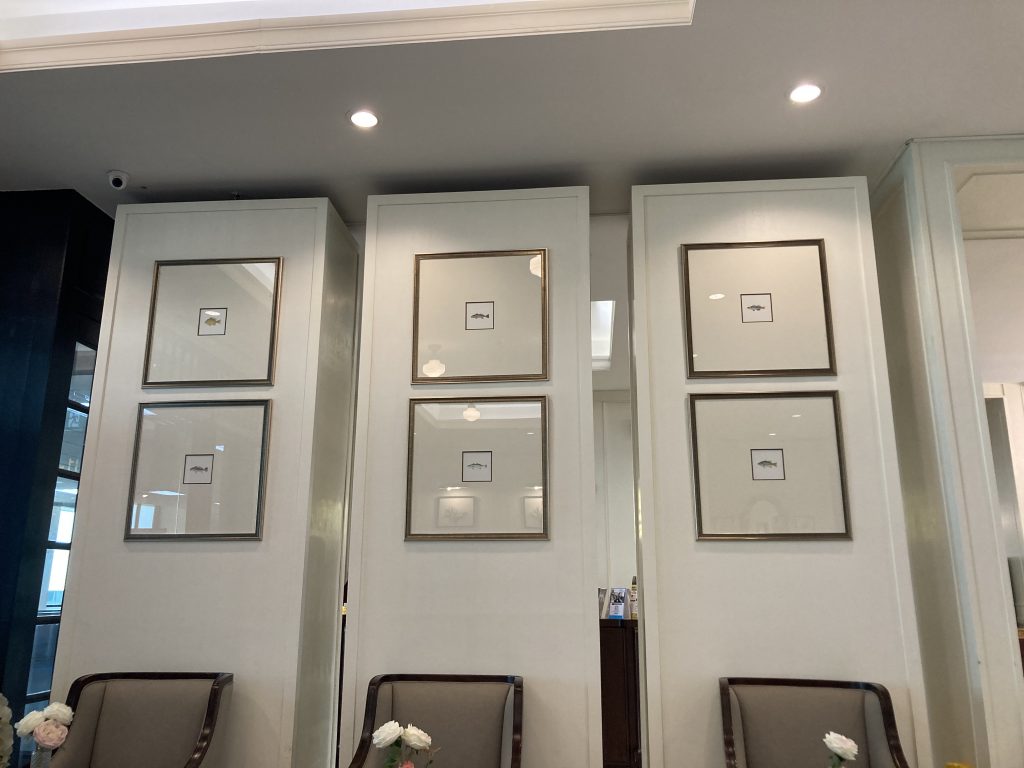
There is something about people who loiter in dispensaries, something that makes them less bearable than your run-of-the-mill addict. It’s the snobbery, I think. The same depth of knowledge and willingness to flaunt it that certain serious coffee drinkers sometimes exhibit. Legalization, which I’m generally for, has only made it worse. The people who were smoking premium pot before it could be bought in-store lord it over those who started smoking when it was safe. The people who stick to edibles talk lung cancer and the people who smoke talk diabetes. It’s the same entitlement capitalism breeds in every market- each consumer must think they alone are consuming the most efficiently. The most ethically.
All of these people are present at ‘Borderline,’ and I get the sense that everyone knows I am the lowest common denominator.
I order a coffee. I’ve given everything else up.
‘Combine the legalized weed of Colorado and the cheap chemical moonshine of Arizona’s Charles County and you get a half-mile, yard-wide strip of land where a person can be truly cruel to their body and break no laws in the process. ‘Borderline’ owns this property in its entirety and what it loses in double taxation it makes up for with a frighteningly loyal customer base- one that leans libertarian and gun-owning.
Police tend to steer clear of ‘Borderline,’ mostly due to a series of successful suits waged on local departments, claiming that officers from either or both sides were acting out of jurisdiction and arresting citizens who were breaking no local laws. ‘Borderline’ has compensated by employing a private security team for each side of the property, each with a very strict protocol regarding what they are legally allowed to do to customers on either side of the border. Bouncers on one side sometimes herd unruly customers to the other, creating a ping-pong game of angry drunkards.
‘Borderline’ sits in stark contrast to the legal puzzle box that sits at ‘Four Corners.’ No man sits at ‘Four Corners’ without breaking one law or another. It is impossible to visit without arrest.’
My order for coffee takes a while. I get the sense they don’t particularly want to brew it but why else have it on the menu? Why not just tell me the machine is broken?
It takes me a while to realize that there is no music playing at ‘Borderline,’ that the atmosphere is almost business-like. People arrive on their own and set about the business of getting blasted with bored determination. They sway in their chairs. They knock over their bongs. They call for another drink, the smell of which I had originally mistaken for some sort of industrial cleaner. They watch me watching them and they begin to get upset.
Nobody wants to be seen like this.
I take my coffee to go and get pulled over across the country line.
Freshly broken taillight.
-traveler
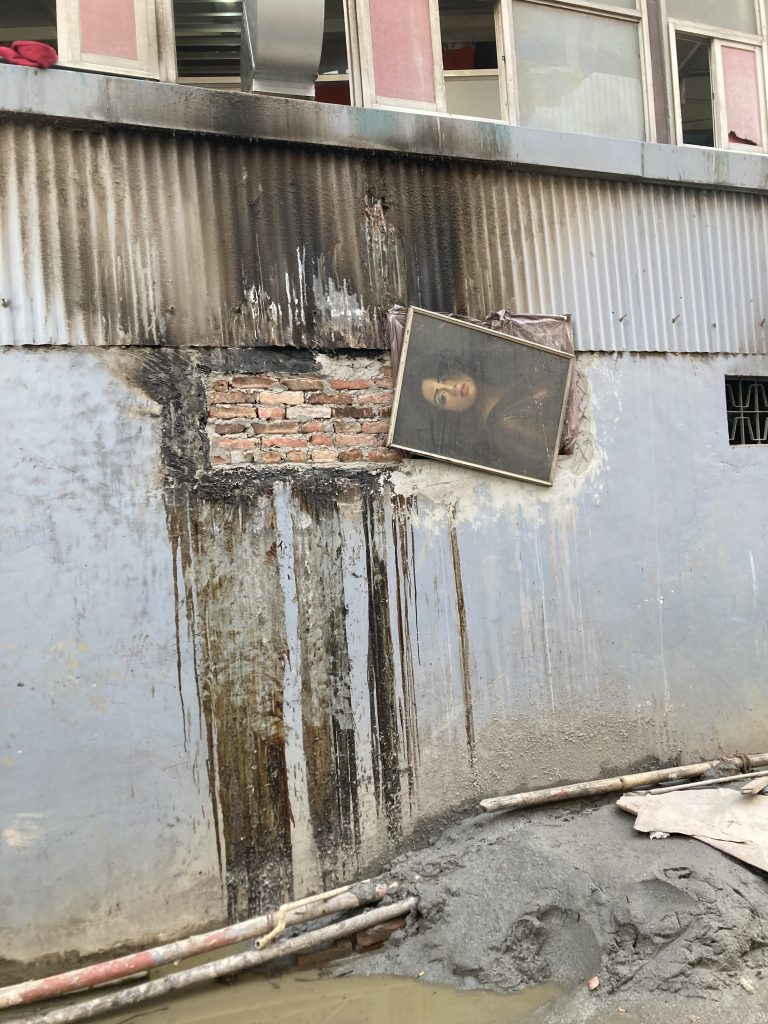
‘It’s not uncommon, when driving through Pennsylvania, to spot the most beautiful rainbow one has ever seen. Its lines are clear against the sky and there is a glow about it, even in the day, as though it were emitting eyewatering UV in other-than-violet tones. It’s difficult to look at. It’s difficult to look away from. This is all by design.
There is nothing natural about ‘The Everainbow.’ Some might say it is the antithesis of nature, both because it has capitalized on one of those few beautiful things nature gives freely, and because it tends to short-circuit bird brains, causing them to dive headfirst out of the sky. Its creators tried and failed to work the ‘gold at the end of the rainbow’ schtick early in ‘The Everainbow’s’ operation, claiming they were the first to make good on the old myth. When this didn’t sit well with audiences, the two men responsible simply deleted their social media accounts and retired to the comfortable silence of people who make too much money to worry about image.
‘The Everainbow’ is something to see- that can’t be argued. It undulates in the wind and shivers in the cold. It’s projected twice its normal size on a new moon and it lowers to half-mast in the wake of tragedies. A satellite radio program airs on Friday evenings and ‘The Everainbow’ moves to the beat of its songs. The program is at least 50% advertisements and ‘The Everainbow’ is known to contort itself to sell products.
The painful UV effect is the latest in ‘The Everainbow’s’ features, this one a government-mandated backfire meant to keep drivers from getting distracted. Accidents have doubled since it began to singe eyes and people living nearby have reported colorful, blistering tans after standing in the glow for too long.
Real estate in the area has skyrocketed. Every new product run across the arc is a success. Celebrities and influencers bathe in the light, trying to get the blistering tan just right. On Sunday mornings ‘The Everainbow’ streams a solemn list of people killed in Everainbow-related accidents. Mourners gather to capture the honor on camera.
‘The Everainbow’ can do no wrong in the eyes of the public. It has begun flickering coded messages and a cult is forming around them. Don’t listen to what ‘The Everainbow’ says in those dark spaces. It is lying and it wants the worst for you.’
-an excerpt, Autumn by the Wayside
There are four men at ‘The Alien Crash Site’ when I arrive. It’s noon on a Saturday and the interstate buzzes behind me. It’s exactly the right time to stop at a place like this- to have a picnic, here, or to pee in the facilities. ‘The Crash Site’ is a state park, or, if not officially a state park, it’s a state-funded destination. There is nothing at the turn-off that suggests it is closed to the public. Nothing at the entrance. Just like there is nothing to suggest that three of the men are plain-clothes soldiers, outside of their very rigid posture and their jackets, bulked up by concealed tactical armor.
The fourth man, at least, is in fatigues.
‘The history of ‘The Alien Crash Site’ begins abruptly with some of the strange phenomena that have been observed in the clearing. These include floating lights of all colors, strange, inhuman whispers, and the occasional unwitting levitation (none of which have been caught on camera). The history does not cover the actual crash or how anyone might know it is a crash site. It does not suggest why most people believe it needs to be approached under cover of dark and at risk of being fired upon by military guards. These things are taken for granted, as if they were always known. But they were never known. They still aren’t.’
The soldiers stare at me. I stare back, to the best of my ability. Nothing else happens.
I return to the camper and grab an old shovel I found along the highway when I stopped to pee. I step back into the clearing and see that, with the exception of their eyes, which follow me, the men haven’t moved. Past the edge of the clearing, the men walk with me in a sort of dance. For each step I take toward the center, they move slightly closer and in whichever directions allows them to stay equidistant from me.
Another man arrives from the parking lot- he has a kid on his shoulders. They see what’s happening and leave.
By the time I’ve reached the center of the field, the soldiers are each withing a couple yards. I take care to maneuver the shovel in a way that seems unthreatening. My phone hangs from my pocket, not-so-secretly recording this interaction and not so secretly streaming it to the cloud. The shovel slips into the ground. The soil is soft, as though recently churned. I dig and the soldiers watch.
After about an hour I begin to pull up little bones. Small skulls soon follow. By hour two I have a whole collection laid out- an alien crew and pieces of what might be a hull. The soldiers seem neither surprised nor concerned. I take pictures of everything. I upload it to a link-sharing site and wait to verify that it can be viewed publicly. I place one of the little skulls in my pocket.
The soldiers don’t move back to their original positions as I leave. They wait until I’m loaded into the camper and then, drawing small, folding shovels, they begin to re-bury the crash site.
The alien skull glows in the dark. I try to post the effect but receive an error message. My old post is gone. The skull is warm to the touch.
I take the skull back to the field and bury it myself. The soldiers don’t even move this time. They must have seen this happen before.
“We’re cool now, right?” I ask. The soldier in fatigues nods in a way that makes me add: “Won’t happen again.”
He shakes his head slowly as if to say: No, it won’t.
-traveler
‘‘The Nation’s Smallest Graveyard’ seems like the sort of place that would be reserved for one heroic individual who traded their life for the life of another- for someone who faced death, unflinching, because they knew their end would be the continuation of another’s. Or maybe a child, I suppose. A lovable cat.
‘The Nation’s Smallest Graveyard’ doesn’t appear to hold any of these things- doesn’t appear to be anything but what it claims. It’s about a yard squared and it sports a couple dozen miniature tombstones indicating, one has to assumed, a couple dozen lots. ‘The Graveyard’ is old and its stones are so small that it’s proven impossible to decipher what words may once have indicated for whom this honorable place was cordoned off and why they were so small. Some believe it’s an old pet cemetery- the sort of place put together by somebody who is handling a pet all wrong. Others believe it is a proper graveyard, but that the lots each hold only a finger of the interred. Why? Nobody is sure. There’s no historical context. Nothing in legend. It would be as weird a thing to do in the olden days at it would be now.
Then, there’s ‘The Southeast Lot,’ on which someone has taken to placing a flower. Blue petals. Yellow center. The flower is miniature like the grave and nobody can identify it or find a living sample. These things together, a Wayside destination make. It’s all mystery- senseless mystery- and for some reason, everybody is too scared to dig the place up and solve it.
-an excerpt, Autumn by the Wayside
© 2024 · Dylan Bach // Sun Logo - Jessica Hayworth
Recent Comments