
ghost

Hector thrives in the dark. Maybe it’s a rabbit thing. Maybe it’s a once-blind, now-sighted thing. Maybe it’s just Hector who, thankfully, doesn’t seem to mind the amount of time he spends in his kennel as we travel and who is more than willing to accompany me into ‘The Mine Mine,’ which is both dark and, in places, tight. It’s the people he’s skittish around and I’ve learned, myself, that this is a wise instinct. I avoid the light of other headlamps, keeping mine dark until the very last moment. Then, we begin to dig.
‘Part museum, part burial-mound, ‘The Mine Mine’ is the eclectic collection of an eccentric dead man. In the style of old pharaohs, he chose to be buried with his belongings and made good work of it himself, casting everything he grew tired of into a natural pit on his land. The pit is one of two entrances to a complicated cave system where these discarded possessions spread out over the years but were otherwise preserved. The second entrance was found long after the man had died and had been ceremoniously sealed in the pit. By then, much of the land was public and a ticketing system was established. This tenuous nicety is the only thing keeping the activities at ‘The Mine, Mine’ in the arena of ‘discovery’ rather than, say, ‘looting.’’
There are precious few rules at play in ‘The Mine Mine.’ A lot more in the way of personal liabilities. A blinking key chain on my belt loop should, theoretically, indicate my location in the caverns and send an alert if I’m down here too long. That way they can charge me for the overstay and, if I’m lucky, recognize if I’ve fallen into a pit or otherwise mangled myself past the point of self-evacuation.
The route I take isn’t very long, but it’s off-map and a little more treacherous than what the average family caravan is willing to risk for old canned food and cave-softened memorabilia from the man’s past. A narrow crevasse opens along the floor. I jump it, rather than trust the rickety bridge someone installed nearby. I’ve read that early Mine-miners set traps. This was before everyone realized that it was all mostly junk, down here.
Hector and I squeeze through a crack in the wall, one that I might not have been able to make even a year ago. I’ve been losing weight- enough that people sometimes comment on it in a less-than-complimentary way. In this instance, it means I make it into a chamber that is inaccessible, or at least, not worth the risk, to others. There is a skeleton on the floor, which is concerning, but not surprising. The sign outside said I might see things like that. I double check that it’s a Halloween decoration but I’m not medically knowledgeable and some combination of squeamishness and superstition keep me from turning it over.
I squeeze into the next chamber and feel my feet go out from under me. I tumble into a pit full of old toy boxes before I slide down into a new cavern some thirty feet down. There’s some panic. Some grappling for my light before realizing its still attached to my head, blocked by the paper stat-card for an old transformer. Hector slides down after me and starts to chew the garbage we brought down with us. I try to find my bearings and, instead, I find the body of the man in his tacky, bejeweled casket. Several of those jewels have been pried away by a crowbar hidden near the north wall.
This is not my first time in the chamber. Not my second. Every few years I have to lose the weight and shuffle around in the dark, waiting to fall through those boxes because I can never quite remember where the pit is and marking it would make the treasure that much more obvious.
I take six more jewels- enough for the next couple years if I’m careful. I don’t trust myself to take them all at once. With that much money, I could do anything.
But wouldn’t.
-traveler
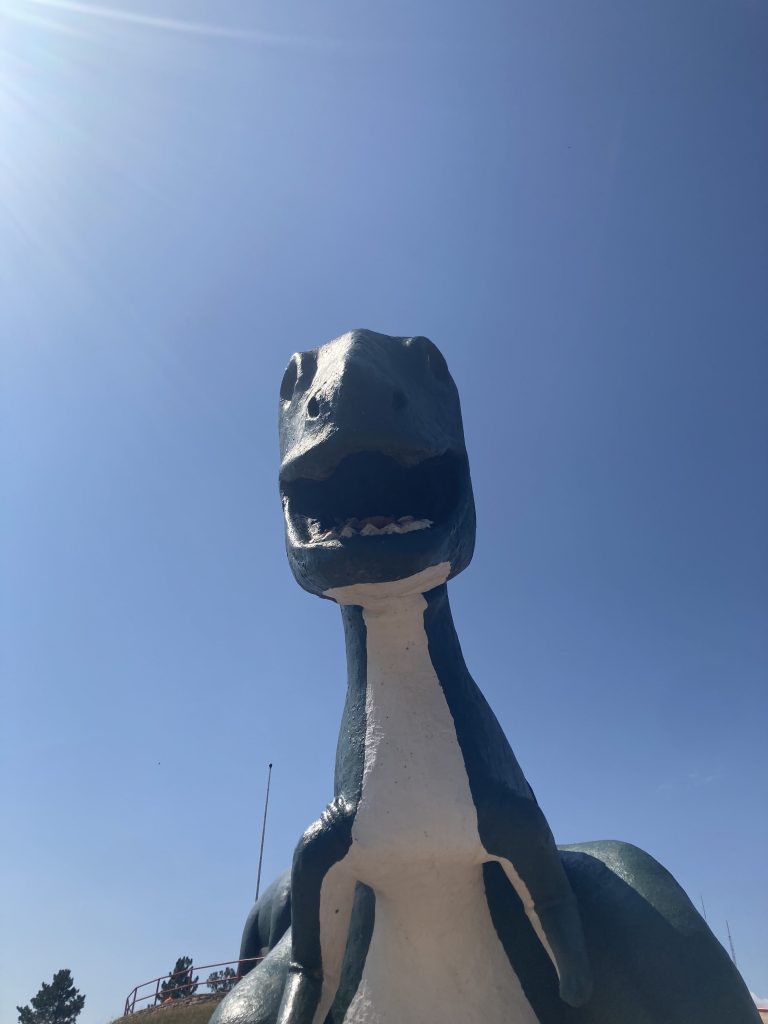
‘Twisted and fused, as though by some horrible heat, the bones in Wyoming’s ‘Werewolf Fossil Beds’ are probably anything but lycanthropic. Perhaps a group of ancient men were out walking dogs when a volcano erupted. Perhaps a freak acidic geyser ended a pursuit of villagers by wolves. Perhaps the remains are an example of surreal art from some bygone age.
These are examples taken directly from signage posted at the site, which tends to champion any theory but the werewolf one. In doing so, the site has inadvertently unified werewolf-believers in their assumptions about the bones. The gift shop sells no wolf gear, a need that local entrepreneurs are more than happy to fill. Every gas station in a 50-mile radius of ‘Werewolf Fossil Beds’ sells monster plushies, and every diner serves werewolf steaks.’
A man is becoming a werewolf at the fossil beds when I arrive. It’s a fairly torturous process. And long. He stops to grunt out that he’s “about halfway there” when Hector sniffs his face. He suggests, between breaths, that when the transformation is complete, neither Hector nor I should be in the vicinity.
“I don’t know what I’ll be capable of,” he explains.
If the man weren’t coherent enough to explain, I would have assumed that the transformation was a seizure, maybe. A very pinched nerve. He’s grown no excess hair. His fingernails, hardly claws, are bitten down to the skin. In his favor, his shirt is torn in the style of Hollywood werewolf transformations and some of the sounds he’s making are borderline animalistic.
The trouble is that the man’s transformation is taking place right in front of the only informational sign available at ‘Werewolf Fossil Beds.’ It’s awkward to lean over him. Awkward physically, for me, because I’m either top-heavy with a rabbit in my hands or struggling to keep Hector away from the were-man with one foot. It’s awkward for the transforming man too, I can tell. He’s polite enough not to say anything, but his anguished spasms are less involved when I’m too close, like he’s afraid he’ll hit me as the muscles of his shoulders jerk and roll. He whimpers a few times, some primal were-cub entering the subconscious, I assume. Finally, I come to a solution.
“Could I just, uh, drag you a few feet to the left.”
“It might be dangerous,” he warns, but by then I’ve already got him by the pant legs and all his symptoms seem to move above the waist.
He wriggles and claws at the floor. He nips half-heartedly at my shoes. After a few seconds I’ve got him far enough away that we can both go about our business peaceably.
I leave before the transformation is complete.
People do strange things we they believe as hard as that man does.
-traveler
‘The Wayside is, at times, more a matter of perspective than a true, physical place. A prime example is ‘The International Travel Experience,’ which was too popular to qualify for a Wayside designation in its heyday, the 1950s, and remained a little too popular well into the new millennium- a case of nostalgia blinding its audience to certain red flags. ‘The International Travel Experience’ was something of a museum on wheels, allowing the working-class family to ‘tour the world in ten minutes or less’ by presenting room-sized mock-ups of famous destinations and sprinkling them with crude, robotic caricatures to serve as guides.
Now defunct, ‘The International Travel Experience’ rots like a corpse off the interstate, drawing gross sympathy from apologists and rightful scorn from those travelers who strive for a kinder roadside. Violence can be expected, here. The soul of the thing is not yet extinguished.’
-an excerpt, Autumn by the Wayside
‘While this author doesn’t disagree with the sentiment in its common context, a traveler is right to be suspicious of any business that takes seriously the adage: ‘It’s about the journey, not the destination.’ In this, the free market, the product must take center stage, or it will be met with suspicion.
Though, there is a loophole.
Sometimes a product can be so bad- a service so grueling- that those who engage with it feel bonded in misery. The camaraderie, the story, becomes the anti-product and the original purchase is relegated to a position of practical necessity, like an egg carton to eggs. That’s why this is a loophole rather than an exception, and it’s why a business like ‘Mazcar’s Magical Mashed Potato Sandwiches,’ which sports ‘The World’s Longest Drive-Thru,’ carries on in even the most hostile economic situations.
Misery begets misery, and the misery that ‘Mazcar’s’ serves up is, at least, the sort we choose to inflict upon ourselves.’
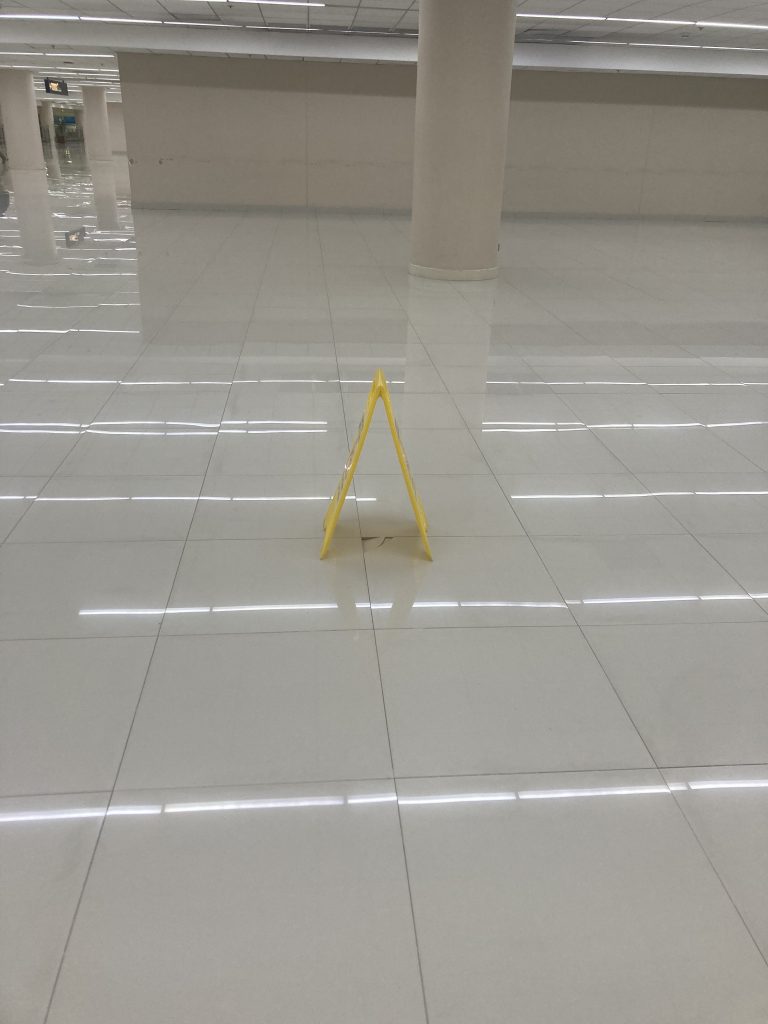
‘Mazcar’s’ is built into an otherwise unoccupied parking garage which was constructed for an exciting new outlet mall and made obsolete by the mall’s failure to materialize. Originally occupying just three rooms, ‘Mazcar’s’ sandwiches were featured in a viral video post and became a ‘whole thing’ overnight.
This, I learn from the woman behind me in line.
Truth be told, I’ve been cutting some corners in my research, favoring the practical for the fanciful. For instance, I know that the average time spent in ‘Mazcar’s Drive-Thru’ is around 10 hours, which is down from 13 when I first passed it a few years ago and represents an all-time low since the precipitating incident (what I now know was a video).
Considering the long wait time, I’ve packed a great deal of food and water for Hector and I and worked out a bathrooming solution for the both of us: a small litter box for him and an uncomfortable in-pants urinal thing for me. I’ve read the few rules that ‘Mazcar’s’ has posted regarding drive-thru etiquette and studied the strategies of those who have come before me. Most agree that the longest one can be out of line before losing their place is not so much a matter of time but of distance, that is, the distance between the front of one’s own vehicle and the back of the vehicle ahead. More than one vehicle length is dangerous. More than about 175% of one’s vehicle length is an endgame most of the time. Everyone seems to agree that the line won’t put up with a two-vehicle gap and there is a lot of frustration in a line so long. It snaps with a great deal of force.
The only other thing I learned about ‘Mazcar’s’ is that I should prepare to be disappointed. The drive-thru spirals up the center of the garage and then back down around the outside, weaving in and out of itself. Microphone sign-boards check and re-check customer orders, sometimes offering false assurances that food is being fast-tracked, other times seeming to flub details in order to test customers of their own preferences. It’s complicated and almost beautiful but the sandwiches are said to be pretty awful. Food should taste good or be easy to eat or healthy, at least, but ‘Mazcar’s’ are none of the above. Reviews say they’ve only gotten worse and a profit data suggests this may be by design. The worse the sandwiches get, the cleaner the catharsis.
I verify with a speaker to my left that my order is still #338 and that I wanted just ‘Mazcar’s Orginal:’ two mashed potato patties in a sort of grilled cheese formation. It’s the cheapest offering and the hardest to screw-up. The woman behind me tries to strike up a conversation but I pretend not to hear her. Someone honks in the distance.
It’s been three hours, now. By midnight I should have my sandwich and then Hector and I will have to risk camping on the outskirts of the garage or driving to the nearest motel, some thirty miles north. Seems like a waste to spend the money on a room I’ll only use for half a night, but then, I’ve gotten sort of used to sleeping on the ground.
-traveler
‘The origin of ‘The Essentialized Americatown’ in the Americatown district of San Francisco (and the subsequent Americatowns within those Americatowns) is commonly misunderstood as a bit of an inside joke. In actuality, ‘The EA’ was formed of such serious intentions that it passes as satire for most of the people that come to understand what it is: an unabashed display of patriotism taken to the extreme.
The first level of Americatown is, what might be termed, the ‘Las Vegas’ version of the country. Most of the nation’s monuments exist in miniature within its bounds and lawlessness is kept to the sort of guilty fun one expects in a shady casino. Americatown II (and here we’ve chosen to assign numbers though the many sub-Americatowns recognize no such tiering) is much more serious, where lawlessness is taken to a near-fascist place, where citizens are expected to obey the rules police and politicians flout. Those same police and politicians turn a blind eye on the antics of Americatown III, which is undergoing a perpetual civil war, the basis of which is both sides claiming ownership of Americatown III, which professes no allegiance whatsoever.
This goes on and on- there are other books that detail the various Americatowns in all there eccentricities. What’s important to this tome is the story of what exists at the very core Americatown (and, here, we are unsure which number to assign). It’s rumored that, in the very center of all Americatowns, there exists a loaded gun that is constitutionally above the law. Six shots with no legal consequence- that is the core of Americatown, America.’
-an excerpt, Autumn by the Wayside
© 2024 · Dylan Bach // Sun Logo - Jessica Hayworth
Recent Comments