
well off
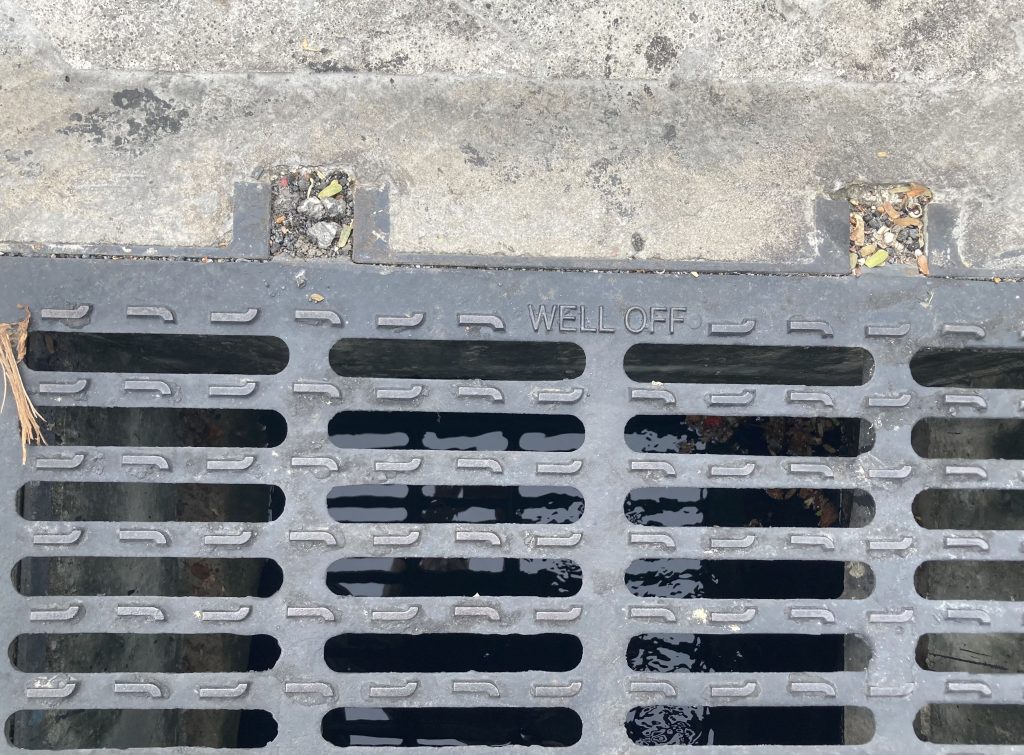

At its largest, ‘The Lawless Square’ of Eastern Mississippi was not at all unlike ‘The OSHA Violation Grounds.’ It was exactly what it claimed to be: a city block’s worth of land on which no federal or state laws were enforced. This is not to say they couldn’t be enforced- that would be in violation of the spirit of the thing. Any large enough militia could, theoretically, have taken control of ‘The Lawless Square’ and imposed laws upon the place, but only up to a time when an opposing militia might arrive with better weaponry and a new flavor of justice. In that regard, ‘The Lawless Square’ has never been all that different than any other place, really.
These days it’s all but impossible for a militia to hold ‘The Lawless Square,’ not for stricter rules, but for tighter borders. ‘The Square’ has been whittled away over the years and is now really more of a lawless circle, just two feet in diameter. So, while a particularly determined militia once stood five of its members on each others shoulders in an attempt to hold the place, all it took was one, entirely lawless push before the regime crumbled, both literally and figuratively, firing their entirely illegal automatic rifles all the way down and injuring a number of bystanders in the lawful zone before landing in Mississippi proper where they were promptly arrested for crimes they had only begun to commit during the fall.
‘The Lawless Square’ is no longer big enough to commit murders in. It’s not so convenient a spot for grand theft auto or any sort of heist-like scheme. ‘The Lawless Square’ is really only a place to do drugs now, really only a place where a single person can do just enough drugs that they retain the wherewithal to stand within the rough circle long enough that all traces of the illegal substance have left their system.
Police are known to gather nearby, hoping to nab people from their place in line rather than wait for the current resident of ‘The Lawless Square’ to cross the boundary back to lawfulness. For all the arrests that take place around ‘The Square,’ the area is technically the most crime ridden place in the country. Considering the constraints involved, ‘The Lawless Square’ itself is one of the safest places in America to be.’
With no crimes high on my list to commit, I don’t plan on waiting in line for a turn in ‘The Lawless Square,’ but when Hector and I arrive we find it empty. I cross-reference the coordinates with Autumn by the Wayside and with several others sources online, having heard rumors that sly officers will sometimes construct false lawless squares where, in reality, laws are completely enforceable. The location comes back as genuine and, in addition, I discover that autumn tends to be slow season for crime-committing in the area. A happy circumstance.
Cautiously, then, Hector and I step into bounds of ‘The Lawless Square’ and, for just a moment, I feel the weight lifted- I feel the sheer breadth of opportunity gaping out around me, begging me to act. I dig into my pack, trying to think of some small crime to commit to make it worth my while, but come away empty handed. We stand for a moment longer and step back out into the world.
-traveler
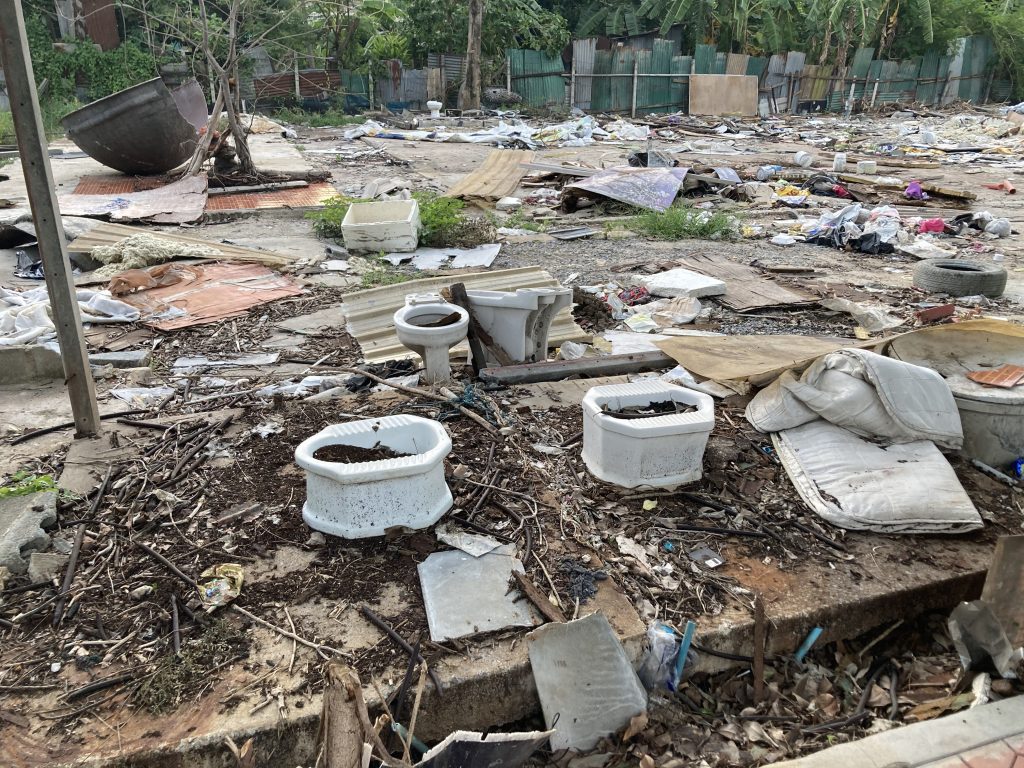
Earlier in my life I would have described my relationship with the sun as being fairly neutral; so neutral, in fact, that I likely would have raised an eyebrow at the overall idea of a relationship with sun- with the very premise of the question. That’s changed a great deal since I crashed the truck and have taken to exploring the Wayside on my bike. Since then, I have developed a keen awareness of my relationship with the sun and I can say, without hesitation, that it is oppositional.
Sunshine finds its way in through my clothes as easily as rain and, unlike rain, I don’t notice until it’s too late- until I’ve settled into my sleeping bag and the red-raw skin makes itself known. Sunshine strikes me in the eyes at odd times, blazing down from the sky predictably, sure, but bouncing off innocuous metal surfaces, too, always at inopportune moments.
And the heat.
There are ways of staying warm on the bike. Few to keep cool when it matters. I can wait out the rain and the snow but the heat, when it arrives, is unending. Nighttime hardly lingers on those occasions that I’m passing through the south in early autumn. The world never cools. The sun only blinks its eye.
I am skeptical of every destination but more skeptical of ‘The Sky Callus’ than I probably ought to be.
‘Vermont makes a big deal out of ‘The Sky Callus,’ hinting, but never claiming outright, that it somehow exists as a result of their dedication to the environment. This author does not debate the climate crisis nor does he tend to downplay the importance of living a green lifestyle, but it should be clear to anyone with any sense that a mottled atmosphere is a scarred one. Whatever comfort there is to be had under ‘The Sky Callus’ is representative of the calm before the storm, not the cloud’s silver lining.’
I don’t understand the mottling effect of ‘The Sky Callus’ any more than I understood the concept of a hole in the ozone layer. How does atmosphere form gaps? How does it bunch up in odd places? I assume there will be something, be it signage or a visitor’s center, at ‘The Sky Callus’ that might explain the science of it all in layman’s terms but am greeted, instead, with what may as well be a circus.
The tackiest form of tourism has taken root at ‘The Sky Callus.’ Sweaty men sell eight-dollar lemonade from garish trailers. Haphazard family businesses hawk fried goods. Every booth seems to be playing a variation of the same loud rock music- all of it beachy and upbeat and insistent.
The area beneath ‘The Sky Callus’ is clear, at least. Some authority has made it so that the vendors can’t exist on the field itself so they hover just on the outskirts, close enough that they can pass food over the fence. Visitors huddle in the center of the field where the racket is the least intrusive. They complain about the noise and sip their eight-dollar lemonades. Hector and I claim a spot halfway between the two factions, where we won’t be immediately solicited and where Hector’s strange body won’t excite the kids, or frighten them.
And, despite everything, we find peace. ‘The Sky Callus’ is such that it’s impossible to be sunburned underneath it. The light that trickles through is gentle and warming and the crowd wanes in the late afternoon when the air takes on a chill undercurrent that I don’t mind at all. At some point, I fall asleep.
When I wake, I find the moon above us, its own light made bleary and accusing by ‘The Callus.’ I have always felt guilty upon waking from stolen naps, though, so maybe I’m projecting. I haven’t begun to consider my relationship with the moon.
-traveler
I don’t tend to think of myself as an overly squeamish person. If anything, my threshold for violence has risen since the trip began. I’ve been subjected to violent acts and I’ve orchestrated a few myself, though usually only in self-defense. How far back have you been reading? It’s been mostly self-defense, right? Preemptive, occasionally, but self-defense all the same.
‘The Sounds of Violence’ advertises itself as a medical resource and an auditory journey rolled up into one grim experience. In practice, it’s much like any museum on a budget, which is to say that it’s dark and dusty and its exhibits are spaced apart so that the time it takes to view them all justifies the cost of entry. I’m handed a set of plush headphones at reception and an instructional pamphlet that is 75% content warning and 25% ‘exhibits will activate automatically.’ The woman behind the desk mouths something to me and I realize the headphones are of a higher quality than I suspected. I pull them down to my neck.
“Room doors close automatically too,” she explains, “so the sound of forward groups won’t disturb those behind them.”
I look around the lobby. I glance out into the parking lot. Aside from the woman behind the desk, I haven’t seen the face of another human being in nearly three hours. She doesn’t notice that I’m questioning her. Or she doesn’t care. It’s not her job to justify the building’s features to me.
When I enter the first room, the door swishes closed behind me at a speed that puts me a little on edge. There is a sense of finality about the motion that I confirm by receiving no reaction when I step toward it again. I skip past the exhibit and toward the forward-moving doors and am relieved to find that they swing open willingly. Then, I hear a sound like waterlogged sofa hitting cement and a man’s voice shrieking in pain.
I turn and see this exhibit’s title: ‘Injuries sustained while falling.’
‘There are two things worth knowing about ‘The Sounds of Violence’ as a destination.
The first is that they claim all of their audio clips have been taken from real incidents. It would be comforting to assume they are lying, considering the grotesque injuries on display in latter rooms and the unlikely odds that such high quality audio could be salvaged from, say, ‘an accident involving a necktie and a helicopter.’ It would be comfortable to believe that they’ve paid off some voice actors and edited the audio to make it sound almost clownish. Otherwise, those seemingly over-the-top vocalizations would be evidence of a level of human pain unknown to much of the population. It would be a gross insight into what we are capable of feeling as an animal-being.
The second thing worth knowing is that they offer a discounted annual membership and ‘basking’ events in which visitors are given unlimited time in a room between dusk and dawn. They often sell out of both.’
The visual exhibit is nothing more than a series of printed posters detailing, with medical diagrams, the sort of injuries being sustained in the audio clips. The waterlogged sofa man shattered both legs and broke his hip. A snippet of conversation follows- a woman’s voice talking casually about snow, before a metal twang interrupts her and she screams. There is a wet impact and a grunt and then a whir of noise. Tumbling, I think. There is a sound like a branch snapping and the woman screams again. The hectic white noise of her falling stops suddenly and is replaced by the woman’s whimpering. Another clip follows. A man says “I think I can jump that,” and I rush out of the room before I hear him proven wrong.
Illustrations for the next exhibit detail burn injuries. I’ve hardly had a chance to take them in when a groggy voice says: “Wake up, honey. Do you smell that? Is that smoke?” A mattress creaks. Blankets slough off to the floor. A door clicks open and the man shouts “Shit!” He screams.
I yank the headphones from my head and the screaming grows exponentially louder. There are no cords- no indication of the headset being powered at all. They’re construction headphones, made for muffling noise. The burning man’s cries come from speakers in the walls at a volume that tears into my ear drums. I pull the headphones back on and rush forward. Autumn by the Wayside says a full tour of ‘The Sounds of Violence’ takes an hour and I realize, for the first time, that the author never cuts corners.
It must have driven him insane a long time ago.
-traveler
A man sits idly in the reception area of ‘The National Forbidden Knowledge Buyback Program,’ staring out the window nearest the desk with a vacant smile on his face. He turns when he hears me approaching and the smile becomes less vacant. His eyes remain on me as I slide my spare copy of Autumn by the Wayside across the counter.
“What’s this one about?” he asks.
“It’s a travel guide.”
“What’s it called?”
I look between the man and the book. He blinks but refuses to glance down and read the title himself.
“If it’s dangerous, won’t hearing the title be the same as reading it?”
“Probably.”
“Do you have to quarantine or something if you accidentally look down and catch a snippet of a book cover?”
“Don’t know.” He sniffs. “Never happens.”
“You must be good at your job.”
“I’m blind,” he says. I make a face that I hope conveys apology and by the time I realize it’s all only read as silence to him, he continues: “No need to apologize. Happens all the time. So what’s this one?”
“It’s called Autumn by the Wayside.”
“Shoot. I was thinking we got all those.”
“You’ve seen it before?” The man doesn’t answer. “I mean, this has come in before?”
“Used to come in by the cartful. Had to lower the buyback cost because we suspected the author was turning a profit.”
“You met the author?”
“That’s right.”
“Did he look…
“Hmm.”
“Did he sound like me?”
‘Looking for some easy money? There is no better scam than that which can be pulled at ‘The National Forbidden Knowledge Buyback Program,’ where they will drop you some change for any old scrap of forbidden knowledge. They’ll pay a dollar for the true name of the god of Hillmont in Tennessee written on a napkin. They’ll pay a hundred for anything heard whispered in the echoes of ‘The Watery Grave,’ assuming it’s been jotted down. They’ll pay a little for just about anything if it’s pitched with a salesman’s flourish because they won’t actually read what’s been turned in. It’s too dangerous, even, for the sort of AI that can scan a document and check it against encrypted matches. The last time they tried that they accidentally created the internet.
All this to say that a seasoned traveler’s glove compartment will contain secrets enough for a week’s gas money and, with branches in every state, ‘The National Forbidden Knowledge Buyback Program’ is the closest some of us will ever get to a comfortable, government job. As of this edition, a copy of ‘Autumn by the Wayside’ will fetch you $15, down from something closer to $50. If you decide it’s worth the trade, tell Tom I said ‘hi’ and that I’ll see him again soon.’
“I guess you kind of sound like him.”
“Does he come around a lot?”
“He’ll come by every day for a week or two and then he’ll disappear again as soon as we lower the buyback.”
“What’s his name?”
The man arches an eyebrow. “I’m no expert, but shouldn’t his name be on the cover, here?” He runs his finger over the author’s name with suspicious accuracy.
“I just want to confirm.”
“We don’t really do names here.”
“He wrote your name in the book, Tom! People know your name based on what he’s done.”
“My name’s not Tom. That’s sort of an inside joke. It started out like ‘tome’ and then he…” The man’s eyes narrow. “You don’t care.”
“How much for this copy?”
“Twelve bucks,” he says, and he begins to tap at the monitor in front of him. “It was fifteen till he came back with a bunch of spiral-bound copies. Before that, he tried to sell us five hundred PDFs on a single thumb drive, paid per file of course. Bosses wouldn’t let that one fly.”
“I’ll keep the book,” I tell him, expecting that he’ll try to convince me to sell, this being forbidden knowledge after all. He doesn’t. The man’s face slowly turns back to the window.
“You all right?” I ask, and he jumps in his seat, spilling coffee across the counter. The paperback soaks it in and curls its corners in a knowing smile.
-traveler
‘‘The Refuge for Deer with Chronic Wasting Disease’ is better known by a rather unsavory nickname: ‘The Buck Stop.’ This is probably for the best, given that there is very little savory about the enterprise and travelers with any amount of sense will understand the distinction and choose to avoid it.
Masquerading as a care facility, ‘The Buck Stop’ is a zoo by way of disaster tourism. Its keepers gather up the district’s prion-infested wildlife and place them in pens that are carefully designed to extend their torment for as long as possible. The result is a grotesque dissonance between luxuriously outfitted habitats and the insane, decrepit animals that pace their interiors, waiting for a death that won’t seem to arrive.
‘The Buck Stop’ receives considerable state funds for this service. Beyond that, the less that’s said about it, the better.’
Among the many frustrations this journey has offered is the unapologetic hypocrisy with which Autumn by the Wayside will feature a destination for its moral bankruptcy. Surely if the place were an irredeemable blight it would be better not to mention it at all, right? The author of Autumn by the Wayside, maybe me, sometimes writes as though the guide has competition in the publishing world- as though there are other books like it out there. That’s not been my experience. Some of these sites have a web presence. Some of them put up signs or distribute brochures, but Autumn by the Wayside is the only place I’ve found them collected.
And some of these destinations aren’t mentioned anywhere else. Some turn up empty web searches- even those with common names, as though they’ve been scrubbed from the internet. The author, whether he chooses to believe it or not, is placing pins on a map and because I’m a completionist, because I have no idea what I would do otherwise, I am chasing the pins.
‘The Buck Stop’ is one of a number of places that make me re-think the journey entirely. It is as bad as it seems it would be. The habitats are done up in the cartoon rubber that one finds in mall-based children’s play-places. The deer batter their heads against it. They throw themselves at the ground, squawking and whimpering. The smell of death hangs in the air and though much of the signage is dedicated to the impossible transmission of prions across the habitat boundaries, I’ve kenneled Hector miles away and I wear a mask, myself.
Some of the deer seem to have been given habitats to suit their symptoms. It’s unclear as to whether this is a matter of display or an attempt at comfort. A round field houses deer that turn relentless circles. Pillowy sod lines the dens of those that prance drunkenly with each step. The smallest enclosure holds several specimens that have lain down and are seemingly unable or unwilling to get up. Their chests rise with frantic breaths and the cool autumn air fogs about their mouths.
The thing Autumn by the Wayside fails to mention is that the deer each have a price- not to buy, but to kill. ‘The Buck Stop’ has spun this as an act of supreme empathy and a sacrifice on their part, really, because it is an institution devoted to letting nature take its course. For a donation, visitors can end the life of any deer on display and have the corpse destroyed in a nightly burn-pit. Pictures of the donors are up on the wall of the gift shop. None of them look particularly happy.
The last thing I would note, to supplement the sparse write-up included in the guide, is that someone has decided to price the deer based on their condition at the start of the day. The less the deer has suffered, the more it costs to put them out of their misery.
One man shows up on the wall again and again. He seems to come by each morning to buy off the cheapest round of deer- to have them killed before they have to endure another day at ‘The Buck Stop.’
I wonder what the deer must think of him.
-traveler
© 2024 · Dylan Bach // Sun Logo - Jessica Hayworth
Recent Comments