
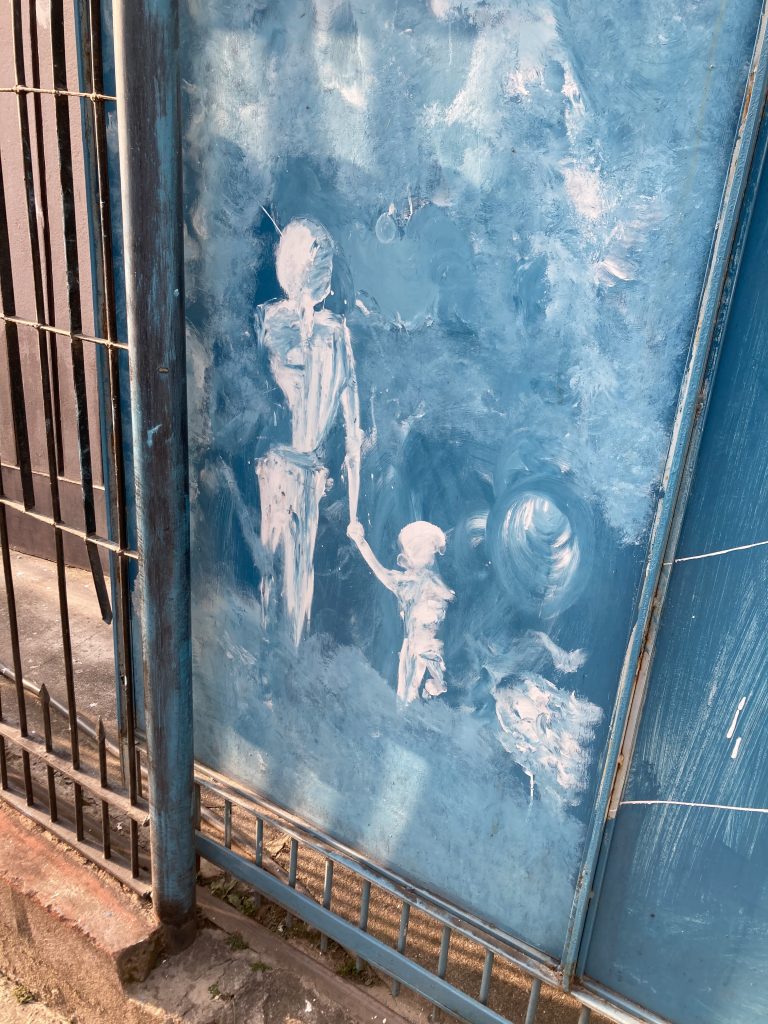
‘‘Oh, you think nature is the only force that can create a proper waterfall? You think natural waterfalls are superior to manmade falls by default? You don’t think that the same civilization that harnessed atomic energy, that carved the faces of dead men into a mountain, that molded chickens into monstrous meat-fruits, can also make some water pour from a high place to a low one?’
This is the attitude with which ‘Grace Falls,’ an artificial waterfall placed, ostentatiously on the outskirts of Las Vegas, was constructed. Thirty stories high. One hundred feet wide. An average flow of 115,000 cu ft/s and pressurized such that its water doesn’t fall, exactly, but is jettisoned downward onto a reinforced cement floor where it vaporizes into a fine mist that occasionally coagulates into a vicious, if not predictable, thunderstorm.
‘It is the horrific reversal of a hydroelectric dam, wasting energy and water alike,’ raves The Clean Energy Coalition (‘raves,’ here, being used in the less positive, near hysterical sense).
What The Clean Energy Coalition can’t deny (though they’ve tried) is that ‘Grace Falls’ is a fairly impressive feat of engineering and it is absolutely mind-boggling to see in life. It roars like a tornado- is capable of bursting a man’s ear drums if said man were to approach the fall’s landing. It is capable of pressing a man’s body through a metal grate, effectively turning him into a series of gruesome hot dogs if said man, disoriented from the damaged ear drums, were to continue to charge forward under the water. It is capable of turning the man’s wife and eldest son into hot dogs as well, and the family’s lawyer too, as was demonstrated by a freak accident that wildly benefited those who own and operate ‘Grace Falls’ some weeks after the initial, less suspicious freak accident.
‘It will turn you into hot dogs,’ reads a sign just past the lower lookout and often obscured entirely by the mist, ‘It will turn everything you love into tubes.’
-an excerpt, Autumn by the Wayside.
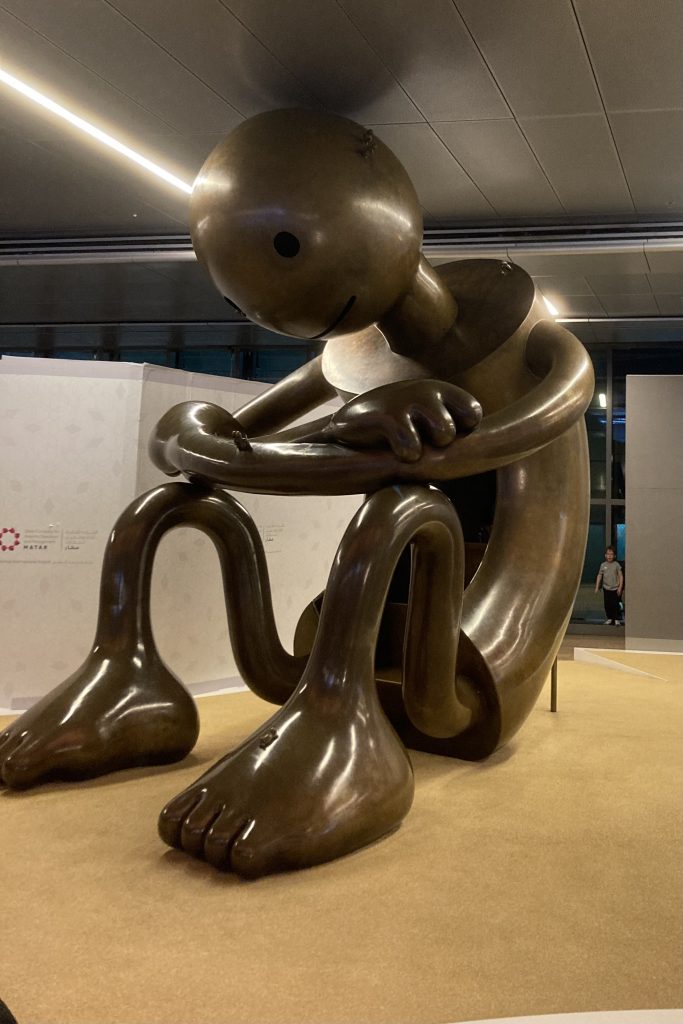
‘A decade on, ‘The Poetry Silo’ is less an exhibit and more a warehouse for storing the world’s largest roll of thermal paper, making it something of a hybrid stop by Wayside standards. Those who come to view the enormity of the roll- to gawk at the constant pace and precise movements of the poetry receiver- are likely experiencing a fairly normal roadside attraction. Much of ‘The Poetry Silo’s’ facilities are dedicated to these people because they spend a lot less time and a lot more money than most of the Wayside travelers who come to read and, even worse, comprehend the words being spouted by the poet.
The poet is nothing more than a receipt printer gone awry in such a way that it mocks coherency. It babbles about the history of the world, pulling off neat metaphors and complex rhyme schemes just often enough to make up for the nonsense it tends to espouse otherwise. Members of certain factions would tell you that the nonsense is all just technique that has yet to reach fruition, the suggestion being that it might be a part of a very long metaphor or a very very complex rhyme scheme. Madness is just unfinished genius, they will say, and of course nobody can prove them wrong because several other factions carefully guard the poetry wheel, insisting it can’t be examined in full until the poem is complete.
As it stands, nearly 75% of the poem has been conclusively recorded elsewhere, initially by scribes and now via a specially programmed stream cam (and the scribes, still, but their work is redundantly spiritual). The missing 25% is all nearer the center of the wheel- output from the first few years when nobody paid the poet much attention, thinking it would give up sooner rather than later. Only the first line is still exposed- a little slip of paper readable from the hollow at the center. It says: ‘First let me tell you a thing you should know-’’
The trouble with getting into ‘The Poetry Silo’ these days is that there is an enormous waitlist, made tremendously long for people who can’t claim to be a member of one of the many quasi-religious factions that seek truths in the words of the poet and, therefore, receive priority access. My arrival is the culmination of a year’s work, insinuating myself into the most inclusive of these factions, the Nowists, whose particular urgency is due to their belief that the only important words in ‘The Poetry Silo’ are those between the poet and the wheel. The real poem is an ever-adapting prophecy, the meaning of which can only be deciphered by the individual reading it in the moment.
It’s a pretty thought and one that tends to generate a lot more hand-wringing and a lot fewer turf-wars than any of the other factions who want to expose or keep hidden the words in the center of the wheel.
So, I’ve spent some time in the Nowist forums and have even attended a few meet-ups when they’ve aligned with my travel and now I have a reasonably believable cover as an exuberant, if novice, Nowist. When I flash my credentials at ‘The Poetry Silo’ along with the various forms necessary for religious entry, I get the usual bureaucratic hemming and hawing that the process necessitates but am actually let through fairly quickly (assuming you discount the year’s work building up to it).
What the entry doesn’t quite drive home is the actual enormity of the poetry wheel. In a decade it has reached the sort of size that gives you butterflies just looking at it and it’s somehow made bigger by the sight of the burned-out little receipt printer that chugs along, spewing words onto specially grafted thermal paper wheels so that there are no gaps in its telling.
When the initial awe wears off I step up close to the visible strip of poem as any good Nowist would be expected to do and I keep Hector tight on his leash in case he gets any ideas. It takes me a moment to remember to read the thing wheel-to-printer and another to pace my reading with the speed at which words are spewed forth and it’s around that time that I recognize at least three metaphors for the Stranger and at least a little foreshadowing of the imminent danger presented by himself, resurrected, and his silky/dark demon rabbit thing.
By then, they are on me.
-traveler
I’m not spooked by the offerings of ‘The Gift Shop,’ at least not as immediately spooked as several testimonials suggest I ought to be. Like any gift shop, the items on display are specific enough to mark the occasion for which they are purchased, but not so specifically tailored to individual experience as to be uncanny or even really all that meaningful.
And maybe it’s a quirk of my life that leads to this initial anti-climax. ‘The Gift Shop’ is a Wayside destination and its offerings are souvenirs from roadside diners and shitty public rest stops and strikingly beautiful forests. I can see how it might be strange for someone who has lived a normal life to find postcards addressed from their kitchen and snow globes featuring the building in which they work. That’s the experience most people have, here. My journey has made it redundant. Or maybe this is its truest form. There aren’t many gift shops off the Wayside. Maybe this is how ‘The Gift Shop’ justifies its existence as part of the fragile highway ecosystem.
It’s a comforting thought, actually, because that might mean that I’m the key to aligning it.
‘Have you ever found a slip of paper on the floor of your home? A slip of paper with a series of numbers and a logo for ‘The Gift Shop’ thermally printed on the back? Fear not and keep that receipt on hand. Without it you won’t be able to claim the picture taken of you in your living room, on the toilet, sleeping soundly in your locked room, or doing any number of tasks, private and mundane. The longer you wait to claim it, the longer it sits up there on the screen for any old passerby to see.’
What gets me first is the realization that the cheap, dark-furred rabbit plushies are not dark-furred at all but sun-blackened little Hectors. With that, the uncomfortably intimate picture begins to unfold in all the little details I’ve overlooked. A t-shirt with all of the names of destinations I’ve visited so far. A bottle opener inscribed with the date I sobered up for good. A take-apart toy truck. An angry Stranger doll. A manga series where I am cast as the cynical protagonist and Hector is my wise-cracking pet.
All of the personalized pencils and pocketknives and key chains are in my name. All of the taffy is spun in flavors that I’ve tasted on the trip. Honey. Tree sap. Asphalt. Blood. There is a boardgame in the shape of the all-seeing eye. It looks boring. Everything is overpriced. The cashier is cloying in his salesmanship. I buy a pound of blood taffy so he’ll leave me alone and am off again before he can trick me into buying more.
It occurs to me, late in the evening, that I don’t think I’ve ever tasted asphalt. Not really. The thought drives me to the road which tastes much as I suspected it would.
– traveler
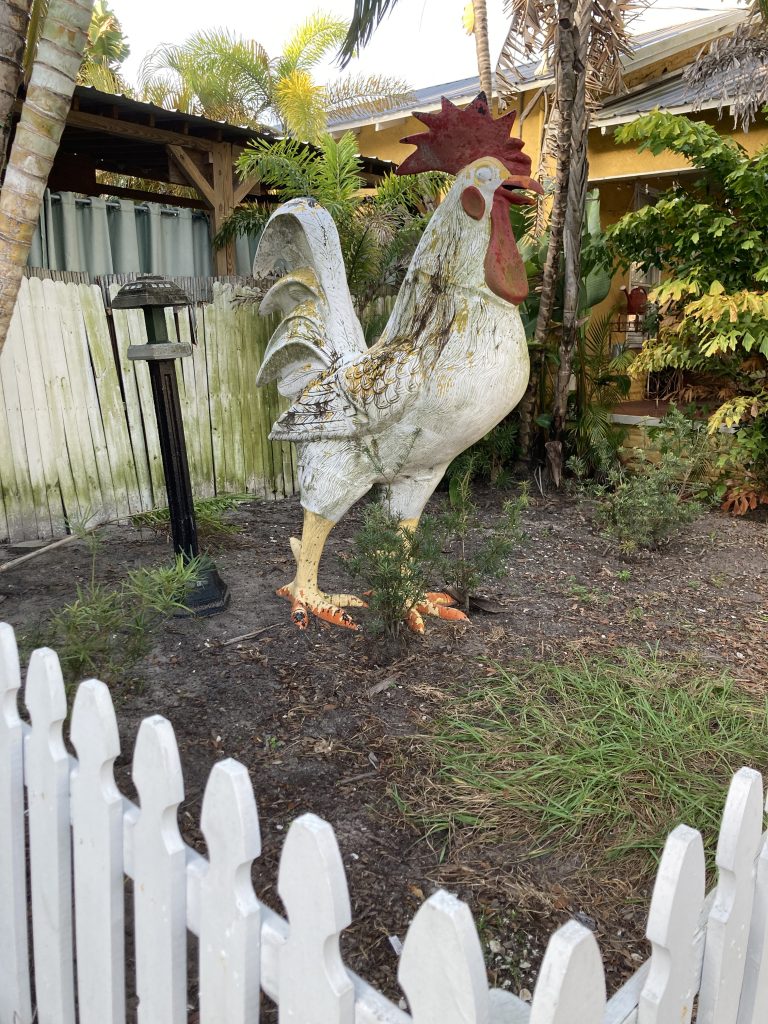
‘‘The Saltlick’ in eastern Wisconsin takes its name from the enriched blocks of salt humans sometimes set out for deer or livestock to see them through the winter. This is despite research that suggests it contains no sodium and ‘research’ that suggests it doesn’t taste salty at all- just nice. In fact, that ‘The Saltlick’ just tastes nice is all that people can seem to agree upon aside from its drab physical characteristics which are as follows:
It is a rough cube, four meters to a side, made smoother for the concave northeastern portion where visitors tend to lick. It is white and rough like a cat’s tongue. It doesn’t smell and is no warmer that the air around it.
It is appealing to look at- that’s something strange to say- and it’s difficult to leave un-licked. Impossible, really. There are signs up near ‘The Saltlick,’ warning visitors before they approach too close and fall under its compulsion. It’s unclear whether these signs have been posted by visitors who have undergone the lick, or those that have somehow resisted. If it’s the former, one might suspect the lickers are aware of some boon to be had by licking and are likewise aware of ‘The Saltlick’s’ massive, but limited, supply. It it’s the latter, well, perhaps the licking changes a person. Perhaps it changes a person in ways only unlicking loved ones can see. And maybe they have a point. Nobody puts up signs encouraging visitors to lick ‘The Saltlick.’ It does fine on its own.
People who have engaged tongue-wise with ‘The Saltlick’ show minor, but lasting health improvements. No miracle cures, of course. Nothing is that simple. It tends to right vitamin deficiencies. It tends to lower blood pressure.
The traditional saltlick is set out by farmers. Ranchers. Deer-leaning nature voyeurs. The most powerful argument against visiting ‘The Saltlick’ can be found on the final sign warning of its proximity. It asks:
‘Who set this out for you?’
-an excerpt, Autumn by the Wayside
Thistle Creek Manor is bordered by a decrepit white picket fence, hardly a few feet off the ground. Still, they use a crane to lower a goat over the fence and into the yard and the woman operating the crane crosses herself as the goat’s hooves meet the earth.
“It’s like Jurassic Park.” Our guide chews the chinstrap of his hat. “But, you know. Ghosts.”
That’s not at all what this is like. He pulls open the bed of his truck and starts handing hula hoops out to the afternoon’s tour group. I take mine, purple sparkles, and am surprised by the weight.
“We fill these with salt. Kosher, just in case that works better.” He nods to a woman that may or may not be Jewish and a few of us shift uncomfortably. “You’re going to be tempted to just carry this around, but that means your fingers cross the salt circle so, instead, we’ll fit you up with a harness.”
The harness is a series of nylon straps, sewn in such a way that they can be looped around the hoop and attached to the neck/shoulder area. After some work, the salt circle hovers at waist-height. Assuming I stand still, anyway. As soon as I move, the hoop starts to bounce back and forth and my feet, at the very least, spend precious seconds outside the arcane protection. Our guide notices my skepticism and steps in:
“Our guys are pretty slow,” he says. “But if you’re worried, it’s best to drop down with the circle until the danger passes.”
A man- a fellow traveler, scoffs behind me. He’s scoffed a few times already, skeptical for an entirely different reason.
“That goat seems fine,” the scoffing man says. He points and I see the goat is, in fact, standing patiently by the gate, waiting to be let back out into the world. The goat recognizes our attention and tilts its head. Then it tilts its head further, into a slow, but undeniably complete, rotation.
The scoffing man shuts up.
‘‘Thistle Creek Manor’ picked up a few poltergeists after a murder/suicide led to a bit of a death cycle. The ghosts of the first incident instigated a few more murders and on and on it went for four decades until the internet really kicked in and real estate agents were no longer capable of skimming over the manor’s ugly past. As is the case with spirits and sea monkeys, the bigger ones eventually consumed the smaller and they remain their still, aware, and unhappy, that they have been monetized.
There have been some human rights complaints about this last point but the owners of ‘Thistle Creek Manor’ insist that the poltergeists are demons in the Christian tradition rather than actual human spirits. This statement has raised other concerns but, with no legal basis to pursue them, ‘Thistle Creek’ turns a neat little profit with next to no overhead.’
The tour of ‘Thistle Creek Manor’ is off-putting, mostly because the tour guide vacillates between horrific anecdotes and what seems like a blatant disregard for our safety. He tells us a story about a visitor that, crossing his salt circle, vomited so much that they could see the bottom of his stomach crowning from his throat. He tells us about a woman that fell through the floorboards and had her salt-hoop shucked off her like corn. They found her three months later, catatonic and forty pounds heavier for reasons that could not be scientifically explained. The guide says they worried, for a while, that the floor incident was the poltergeists getting creative but that it hasn’t happened since, so…
The tour is off-putting as well because the goat follows closely behind, leering and spinning its head if we watch for too long.
We spend an hour in ‘Thistle Creek Manor,’ waiting for something to happen and nothing ever does.
“It’s a little like whale watching, that way,” the guide says, though it’s certainly not. “To make up for it, you can stick around to watch me exorcise the goat.”
I’m the only one to take him up on the offer which, had I realized, I probably would have bailed like everyone else. There’s a shed out back for exorcisms where the man straps the goat down and chants some words and waves a stick.
The goat dies.
-traveler
Recent Comments